
Primary Location
Phoenix Personal Injury Lawyers
2700 N Central Ave Suite 320, Phoenix, AZ 85004, United States
Phone: (602) 905-0124
Call us at (855) 855-8910

Table of Contents
ToggleYou get the call nobody wants. A family member went to work in Phoenix and didn't come home. Now you're dealing with grief, bills piling up, and a company that won't give straight answers about what happened.
We handle these cases at our Phoenix office on Central Avenue. And what families tell us is always the same: they had no idea they could do anything beyond filing for workers' comp.
So what types of on-the-job accidents actually lead to wrongful death claims here in the Valley?
BLS data from 2024 shows construction alone accounted for over 1,000 workplace deaths nationally, with falls causing roughly 38% of them [1]. Arizona's numbers track with that trend. Your family member's death might qualify for more than a workers' comp payout.
Falls from height, scaffold collapses, and struck-by events make a construction accident the single most common type of workplace death our Phoenix wrongful death team handles.
Two separate legal tracks exist after a workplace death in Arizona. Most families only hear about one of them.
Workers' comp runs through the Industrial Commission of Arizona. It's automatic, no-fault. The family gets funeral cost coverage and partial wage replacement. That's it. No money for the emotional devastation. No compensation for what your kids lost when their parent didn't come home.
A wrongful death lawsuit is a completely different animal. You file it in Maricopa County Superior Court. You do have to prove someone was negligent. But the recovery can include everything workers' comp leaves out: full lost income over a career, pain and suffering, loss of companionship, and punitive damages when the negligence was extreme.
Here's what surprises most families. Arizona lets you do both. Collect the workers' comp death benefits AND file a wrongful death lawsuit against whoever actually caused the accident. A subcontractor who created the hazard. An equipment company that sold a faulty machine. The property owner who knew about a danger and did nothing.
Accepting workers' comp doesn't sign away your right to sue. Not even close.
On a typical Phoenix construction project, you've got a general contractor, three or four subs, an equipment rental company, and a property owner. When somebody dies, they all start pointing fingers at each other.
That finger-pointing actually works in your family's favor. More potential defendants means more insurance policies and more sources of recovery.
Workers' comp usually blocks a direct lawsuit against the employer. That's the deal in Arizona. But gross negligence or deliberate safety violations blow that protection wide open. An employer who knowingly sent workers into a confined space without ventilation? That goes beyond normal negligence.
The sub who controlled the task or work area where the death happened is fair game for a wrongful death suit. They're not your family member's employer, so workers' comp exclusivity doesn't protect them.
A crane with a known hydraulic defect. A harness that snapped under normal load. Safety gear that failed its one job. Product liability law holds manufacturers accountable for these failures. We secured a $7.9 million verdict in one product defect case involving a tire blowout that caused a neck fracture.
Whoever owns the building or land has a duty to keep it safe. Crumbling infrastructure, exposed hazards, and code violations all create liability when someone dies.
GCs set the safety culture for the whole project. When they skip toolbox talks, ignore OSHA citations, or pressure subs to cut corners on safety, they share responsibility for what happens next [2].
OSHA violation history is gold in these cases. If the defendant got cited for the exact same hazard that killed your family member, that prior citation is powerful evidence.
Arizona uses pure comparative negligence. A.R.S. 12-2505 says even if your family member bore some fault, the other parties still owe their share. A jury assigns percentages. Your recovery gets reduced by your loved one's share, but it doesn't disappear.
Four things need to be established:
A duty of care existed. Every employer and job site controller owes workers a reasonably safe environment. This part is rarely disputed.
That duty was breached. They skipped safety training. Ignored an OSHA standard. Let equipment fall behind on maintenance. Didn't provide fall protection on a roof. Something specific they failed to do.
The breach caused the death. This is where it gets contested. Defense lawyers will argue the worker made a mistake, or that some other factor caused the accident. Your attorney needs evidence tying the breach directly to the fatality.
Real damages resulted. Medical bills before the death, funeral costs, the family's lost financial support, and the emotional wreckage left behind.
Strong evidence wins these cases. OSHA investigation reports, coworker testimony, site inspection logs, equipment service records, cell phone photos from the scene, and training sign-in sheets that show who got trained and who didn't. Grab everything you can early. Once the employer's lawyers get involved, evidence starts disappearing.
No damage cap exists for wrongful death in Arizona. Zero. A Maricopa County jury can award whatever the evidence supports.
Economic losses add up fast. The wages your loved one would have earned for the next 20 or 30 years. Their benefits. Medical treatment they received before dying. The funeral. Burial. All of it goes into the claim.
Non-economic damages cover what money can't replace but tries to compensate anyway. Your spouse lost a partner. Your kids lost a parent's daily guidance. You lost the person who showed up for holidays and helped with homework. Juries in Phoenix take these losses seriously.
Punitive damages come into play when the defendant's behavior was outrageous. An employer who disabled a safety mechanism to speed up production. A contractor who forged safety inspection records. Arizona courts use punitive awards to send a message.
A.R.S. 12-612 spells out who receives the money: surviving spouse, children, parents, or the estate's personal representative.
Our attorneys fight for families dealing with the worst moment of their lives. A few examples from our case history:
A day laborer fell to his death while trimming a palm tree. Premises and labor code violations were at the center of the claim. We recovered $1.5 million for the family in just three months.
A commercial truck collision on the freeway killed a family's breadwinner. Our attorneys secured a $3.15 million settlement that covered the family's long-term financial needs.
An auto accident caused traumatic brain injury that proved fatal. We obtained a $6 million settlement for the surviving family members.
Every case is different. Past results do not guarantee a similar outcome.
Your head is spinning. You're in shock. But a few steps taken in the first days and weeks make a real difference in what your family recovers later.
Get the incident report from the employer. In writing. Not a phone call summary. Not a verbal explanation over coffee. The actual written report. Ask for it the same day if you can.
Confirm ADOSH has been notified. Arizona's Division of Occupational Safety and Health investigates workplace fatalities. Their office in Phoenix can be reached at (602) 542-5795 [3]. ADOSH reports carry serious weight in court.
Take photos and save everything. The accident scene, the equipment involved, the conditions that day. Screen-shot text messages between your family member and their supervisor. Print emails about working conditions. This evidence vanishes fast once lawyers for the other side get involved.
Get the death certificate and all medical records. Both are non-negotiable for filing any claim.
Say nothing to the employer's insurance company. They'll call. They'll sound sympathetic. They'll offer something fast that sounds reasonable. It won't be. Do not give recorded statements. Do not sign releases. Do not accept early settlement offers.
Talk to a wrongful death from workplace accident lawyer in Phoenix before the clock runs out.A.R.S. 12-542 gives your family two years from the date of death. Sounds generous until you realize a solid case needs months of investigation, expert analysis, and depositions before you even get close to filing.
The Simon Law Group handles these cases on contingency. You pay nothing up front and nothing at all unless we recover money for your family. Call our Phoenix office at (602) 905-0124. We're at 2700 N Central Ave, Suite 320, Phoenix, AZ 85004.
Our attorneys have handled personal injury cases across Arizona and California. We know how Phoenix insurance companies operate, and we know how to push back.
That number reflects real results for real families — medical bills paid, lost wages recovered, and futures protected.
You pay nothing upfront. Our fee comes out of your settlement or verdict.
Accidents do not follow business hours. Neither do we. Call (602) 905-0124 any time — nights, weekends, and holidays.
Our Phoenix team works out of 2700 N Central Ave, Suite 320. We know the roads, the courts, and the insurance adjusters you are up against.
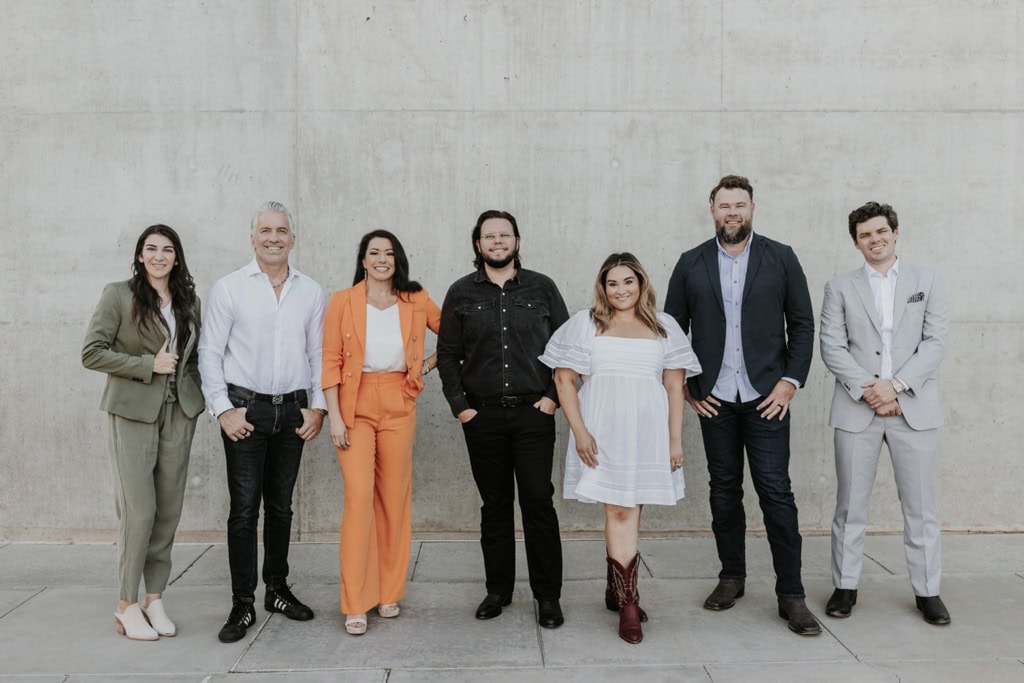
“After a crash, you need a team that answers the phone, explains your options, and fights for every dollar you are owed. That is what we do at The Simon Law Group.”
Over 250 years of combined attorney experience
Phoenix office at 2700 N Central Ave, Suite 320 |
Licensed in Arizona and California
Yes, if a third party's negligence or the employer's gross misconduct caused the death. Workers' comp does not block a separate wrongful death claim in Arizona.
The surviving spouse, children, parents, or a personal representative of the estate under A.R.S. 12-612.
Yes. Arizona treats these as separate legal actions. You can collect workers' comp and sue a negligent third party.
Two years from the date of death under Arizona's statute of limitations, A.R.S. 12-542. Do not wait.
Yes. Third parties who caused or contributed to the death can be held liable in a separate civil lawsuit.
The Simon Law Group works on contingency. You pay nothing unless we recover compensation for your family.
Our Location
Other Locations
Austin, TX
Torrance, CA
Santa Ana, CA
Seal Beach, CA
Areas We Serve
From our main office in Torrance, The Simon Law Group serves injured clients across Los Angeles County and throughout California, Arizona, and Texas. Our Seal Beach office helps us better serve Orange County, and we also have offices in Phoenix, AZ, and Austin, TX.
About Our Firm
The Simon Law Group was founded 15 years ago by twin brothers and attorneys Robert and Brad Simon to protect the rights of accident victims in California. In the fifteen years since our firm was established, our attorneys have recovered $600+ Million in settlements and verdicts for our clients. Recognized by many major legal organizations, we get results, and we’d be proud to fight for you after your accident or injury.
Follow Us!
Attorney Advertising. This website is a communication by The Simon Law Group, LLP. The attorneys responsible for its content are Robert T. Simon (California State Bar No. 238095) and Brad Simon (California State Bar No. 244369). The firm's principal office is located at 2916 W 164th Street, Torrance, California 90504. The information here is general and is not legal advice, and viewing it or contacting the firm does not create an attorney-client relationship. Prior results do not guarantee a similar outcome.