
Primary Location
Phoenix Personal Injury Lawyers
2700 N Central Ave Suite 320, Phoenix, AZ 85004, United States
Phone: (602) 905-0124
Call us at (855) 855-8910

Table of Contents
TogglePhoenix logged 37,472 crashes in 2024. And a huge chunk of those? Rear-end collisions. Across Arizona, rear-end wrecks account for 35% to 50% of all multi-vehicle crashes. That's well above the national average of 29% [1].
So why here? It starts with the freeways. The I-10 and Loop 101 interchange is a mess during rush hour. Cars stack up, somebody checks their phone, and the chain reaction starts. In October 2025, a four-car pileup shut down the ramp there. Happens all the time.
Then there's I-17 at Loop 101. A rollover blocked both ramps in February 2026. And SR 74 near Lake Pleasant saw a dump truck rear-end an SUV in March 2026, killing a 54-year-old and leaving a 17-year-old in critical condition.
Distracted driving is the biggest culprit. Arizona reported 8,289 drivers involved in distracted driving collisions in 2024 alone [1]. That's people texting, scrolling, eating, doing anything except watching the road. Speed plays a role too. Speed-related crashes caused 417 deaths and 20,722 injuries statewide last year [1].
Put it together. Congested freeways. Distracted drivers. People going too fast to stop. Phoenix is practically built for rear-end crashes.
Here's the short version. If you rear-end someone, Arizona law presumes you're at fault. Full stop. It's called the rear-end collision doctrine, and it comes from a simple idea: drivers should keep enough space to stop safely. A.R.S. 28-730 spells it out. Don't follow too closely [2].
But that presumption isn't permanent. It can be overturned. And this is where a lot of people get confused.
Seven situations can flip the blame onto the front driver:
We've seen insurance companies try to pin 100% fault on the trailing driver even when the front driver was brake-checking. They count on you not knowing the exceptions. A Phoenix car accident lawyer who handles rear-end cases will spot these issues fast.
What if you're partly at fault? Maybe you were following a little close. But the other driver also had no working brake lights. Both of you messed up. Now what?
Arizona uses pure comparative negligence under A.R.S. 12-2505 [2]. Meaning you can still recover money even if you're mostly at fault. Even 99% at fault. Your payout just gets reduced by your percentage of blame.
Say you're 30% responsible and your damages total $100,000. You'd still collect $70,000. That's a big deal in rear-end cases because the insurance company's favorite move is arguing shared fault to shrink your check.
They'll say you were tailgating. Or that you weren't paying attention. Sometimes that's fair. Often it's not. We dig into the evidence, the dashcam footage, the skid marks, the damage pattern, to push your fault percentage down as low as the facts allow.
Your body isn't built for sudden impacts from behind. Even a low-speed hit can do real damage.
Whiplash is the one everybody knows about. Your head snaps forward, then backward. Neck muscles tear. Ligaments stretch past their limit. Symptoms might not show up for a day or two. That delay tricks people into thinking they're fine. They're usually not.
But rear-end crashes cause more than sore necks:
Our attorneys recovered a $3,807,200 settlement for a client in a car accident that required spinal fusion surgery.
Rear-end collisions at freeway speeds? Those cause spinal cord damage, internal bleeding, crushed vertebrae. The injuries scale with the speed. A 40 mph rear-end hit delivers a completely different kind of force than a 10 mph parking lot bump.
First things first. Stay at the scene and call 911. Get the police report started. It's not the final word on fault, but it matters later.
While you're still there:
Now here's what catches people. You feel okay at the scene. Adrenaline is doing its job. But whiplash, herniated discs, and concussions don't always announce themselves right away. Go see a doctor within 24 to 48 hours even if nothing hurts. That medical record connects your injuries to the crash.
Over the next week:
It depends. That's the honest answer. But we can give you ranges based on what we see in Phoenix cases.
Minor whiplash, soft tissue injuries: $10,000 to $25,000. These cases usually settle without a lawsuit. Treatment lasts a few weeks to a couple months.
Moderate injuries like fractures or herniated discs: $50,000 to $100,000. You're looking at longer recovery, possible injections, maybe physical therapy for six months or more.
Severe injuries, spinal damage, surgery: $100,000 and up. Way up, sometimes.
We secured a $950,000 settlement for a client involved in a freeway accident that caused back and neck injuries.
Every case is different. Past results do not guarantee a similar outcome.
Arizona's minimum insurance coverage is just 25/50/15. That means the driver who hit you might only carry $25,000 in liability per person. If your injuries exceed that, your own underinsured motorist coverage fills the gap. And if the at-fault driver was driving under the influence, punitive damages could push the total higher.
One thing that tanks claim value? Gaps in medical treatment. If you skip appointments or wait three months to see a doctor, the insurance company will argue your injuries aren't serious. Don't give them that opening.
Insurance companies treat rear-end crashes as "simple" claims. Fender bender, pay out the minimum, move on. That's their playbook.
Problem is, rear-end collisions aren't always simple. Fault disputes come up constantly. The other driver claims you stopped short. Their insurer questions whether your herniated disc existed before the crash. Suddenly your "easy" claim is stuck.
Here's what we do differently. We pull the traffic camera footage from AZDOT before it gets recorded over. We get the crash reconstruction expert involved early when speed or following distance is disputed. We track your medical treatment and make sure the records tie every symptom to the collision.
And we watch the clock. Arizona gives you two years from the crash date to file a lawsuit under A.R.S. 12-542 [2]. Sounds like plenty of time. But evidence disappears faster than that. Dashcam loops overwrite. Witnesses relocate. The longer you wait, the harder your case gets.
Our firm handles rear-end collision claims on contingency. You pay nothing unless we win your case. Call (602) 905-0124 for a free review of what happened.
Our attorneys have handled personal injury cases across Arizona and California. We know how Phoenix insurance companies operate, and we know how to push back.
That number reflects real results for real families — medical bills paid, lost wages recovered, and futures protected.
You pay nothing upfront. Our fee comes out of your settlement or verdict.
Accidents do not follow business hours. Neither do we. Call (602) 905-0124 any time — nights, weekends, and holidays.
Our Phoenix team works out of 2700 N Central Ave, Suite 320. We know the roads, the courts, and the insurance adjusters you are up against.
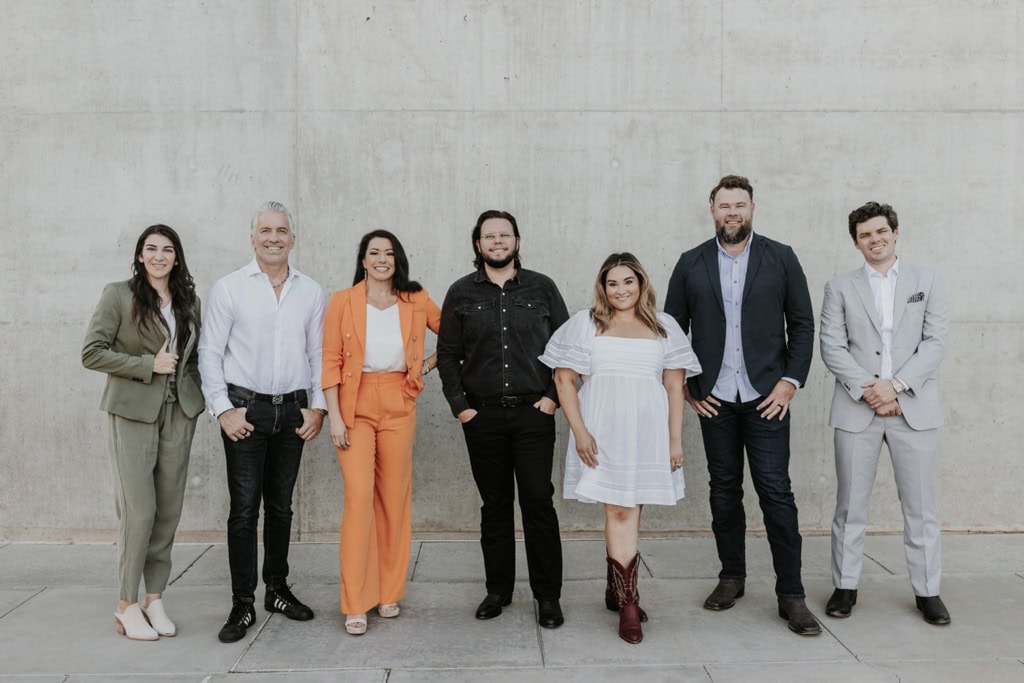
“After a crash, you need a team that answers the phone, explains your options, and fights for every dollar you are owed. That is what we do at The Simon Law Group.”
Over 250 years of combined attorney experience
Phoenix office at 2700 N Central Ave, Suite 320 |
Licensed in Arizona and California
Sometimes, yes. Arizona's rear-end doctrine presumes the trailing driver caused the crash. But that presumption can be rebutted. If the front driver was brake-checking, cut into your lane suddenly, had broken brake lights, stopped without reason, or reversed into traffic, fault can shift to them. We review the evidence to figure out what actually happened.
A.R.S. 28-730 says drivers can't follow another vehicle more closely than is "reasonable and prudent." If you rear-end someone, courts presume you broke this rule. But Arizona also uses pure comparative negligence (A.R.S. 12-2505), so even if you share some fault, you can still recover a portion of your damages.
For a minor fender bender with no injuries? You might handle it yourself. But if you're hurt, if the other driver's insurer is disputing fault, or if your medical bills are adding up, a lawyer protects your claim. Insurance adjusters lowball rear-end cases all the time. Having an attorney changes how they treat your file.
The officer might note who they think caused the crash. But a police report isn't a final ruling on fault. It's one piece of evidence. Insurance companies and courts make their own decisions based on the full picture, including witness statements, photos, dashcam video, and crash reconstruction if needed.
Two years from the date of the crash. That's the statute of limitations under A.R.S. 12-542. Miss that deadline and your case is gone. But waiting close to two years is risky anyway. Evidence disappears, witnesses move, and memories fade. The sooner you start, the stronger your case.
It depends on your injuries, your medical costs, lost income, and how much pain you're dealing with. Minor whiplash cases in Phoenix typically settle for $10,000 to $25,000. Fractures and herniated discs land in the $50,000 to $100,000 range. Severe spinal injuries requiring surgery can exceed $100,000 by a wide margin. Every case is different.
Our Location
Other Locations
Austin, TX
Torrance, CA
Santa Ana, CA
Seal Beach, CA
Areas We Serve
From our main office in Torrance, The Simon Law Group serves injured clients across Los Angeles County and throughout California, Arizona, and Texas. Our Seal Beach office helps us better serve Orange County, and we also have offices in Phoenix, AZ, and Austin, TX.
About Our Firm
The Simon Law Group was founded 15 years ago by twin brothers and attorneys Robert and Brad Simon to protect the rights of accident victims in California. In the fifteen years since our firm was established, our attorneys have recovered $600+ Million in settlements and verdicts for our clients. Recognized by many major legal organizations, we get results, and we’d be proud to fight for you after your accident or injury.
Follow Us!
Attorney Advertising. This website is a communication by The Simon Law Group, LLP. The attorneys responsible for its content are Robert T. Simon (California State Bar No. 238095) and Brad Simon (California State Bar No. 244369). The firm's principal office is located at 2916 W 164th Street, Torrance, California 90504. The information here is general and is not legal advice, and viewing it or contacting the firm does not create an attorney-client relationship. Prior results do not guarantee a similar outcome.