
Primary Location
Phoenix Personal Injury Lawyers
2700 N Central Ave Suite 320, Phoenix, AZ 85004, United States
Phone: (602) 905-0124
Call us at (855) 855-8910

Table of Contents
ToggleEvery week, thousands of people eat at restaurants along Central Avenue, Camelback Road, and Mill Avenue. Nobody walks in expecting to leave in an ambulance. But that is exactly what happens when restaurant owners skip basic safety.
Slip-and-fall accidents are the number one injury we hear about. Grease near kitchen doors. Melting ice by the drink station. A mopped floor with no warning cone. In the Arcadia and Biltmore dining districts, here is something most people don't think about: when it is 115 degrees outside and the A/C runs full blast, condensation pools near entrances and restroom doors. Restaurants know this happens every summer. Most of them still don't put mats down.
Trips are the next big one. Torn carpet edges at older restaurants. Loose tiles that shift when you step on them. Uneven patio surfaces along Roosevelt Row where the heat cracks concrete and shifts pavers season after season.
Then there's food poisoning. Undercooked chicken. Contaminated produce. Food sitting at the wrong temperature because someone forgot to check the walk-in cooler. The tricky part? Symptoms can take a full day or two to hit, which makes it harder to prove where the illness started.
Burn injuries come up more than you'd expect. Sizzling fajita plates with no warning. Scalding coffee handed to a child. Kitchen flare-ups near open dining areas. A simple heads-up from the server would have prevented most of these.
We also handle cases involving:
It all comes back to the same thing. Someone at that restaurant knew there was a problem and didn't do anything about it.
A restaurant slip and fall on a wet kitchen floor, a spilled drink near the bar, or a greasy surface by the buffet line are among the most common accidents that lead to serious injury claims.
This is where things get complicated. More than one party is usually responsible, and the insurance companies involved will all point fingers at each other.
Start with the restaurant owner or operator. They run the space. If the manager watched water pool near the entrance for an hour and never sent anyone with a mop, the liability sits with them.
But the property owner or landlord might share blame too. Plenty of restaurants in Downtown Phoenix and the Uptown corridor lease their space. A crumbling stairwell or busted-up parking lot? That's a building maintenance issue, and the landlord owns it.
Third-party vendors get pulled in sometimes. A food distributor ships contaminated chicken. A furniture company sells tables that collapse. A fryer manufacturer puts out a unit with a defective valve. All of them can carry part of the liability.
Here's one that catches people off guard: chain versus franchise. If you got hurt at a franchise location, the corporate parent might share responsibility depending on how much they controlled day-to-day operations, safety training, and equipment standards. Your attorney needs to untangle those relationships early in the case.
And Arizona's comparative negligence rule under A.R.S. 12-2505 [1] protects you even if you were partly at fault. The insurance adjuster will absolutely try to pin some blame on you. They always do. But in Arizona, your payout gets reduced by your percentage of fault rather than wiped out entirely. Don't walk away from your claim because someone told you it was partly your fault.
The first few hours after you get hurt will shape your entire case. We've seen good claims fall apart because people didn't know what to do at the scene. So here's the playbook.
Get to a doctor. That is step one, full stop. Call 911 if the injury is serious. Otherwise, Banner University Medical Center and HonorHealth are nearby options. Don't wait until tomorrow. Don't tough it out for a week. The insurance company will use any delay against you.
Tell the manager what happened. Ask for a written incident report. Most restaurants have a form for this. If they drag their feet, pull out your phone and text yourself a description of what happened right there in the restaurant. Time-stamped. Done.
Now photograph the scene. The wet floor. The broken step. The dim hallway. Get wide shots and close-ups. Photograph your injuries too, and keep a photo of the shoes you were wearing. All of this becomes evidence later.
Grab witness info fast. Other diners leave. Staff shifts change. Once those people walk out the door, finding them again is a nightmare. Names and phone numbers. Takes 30 seconds.
Keep your restaurant receipt, your parking stub, any texts or emails with the restaurant after the fact. These prove you were there, on that date, at that time.
When the insurance adjuster calls, and they will call, don't give a recorded statement. They'll be polite. They'll say they just want the basics. What they actually want is ammunition. Let your lawyer take that call.
And call a restaurant injury lawyer fast. Surveillance footage at most restaurants gets recorded over every two or three days. A preservation letter from an attorney has legal teeth. A voicemail from you doesn't.
One more thing. Outdoor patio dining runs year-round in Phoenix, especially along Scottsdale Road and near Chandler Boulevard. If your injury happened during monsoon season, July through September, document any standing water, mud, or wind-blown debris right away. That evidence disappears the moment the sun comes back out.
Restaurant injuries fall under premises liability. That is the area of law that says property owners have to keep their property reasonably safe for people who come onto it.
As a restaurant guest, you're what the law calls an invitee. You came in to spend money at their business. That gives you the highest level of protection under Arizona law. The restaurant has to actively look for hazards, fix them, or at least warn you. Not just react when someone falls.
To prove your case, you've got four boxes to check:
Arizona also has its own food safety rules. The ADHS R9-8 standards [2] govern how restaurants handle floors, outdoor surfaces, food temperatures, and sanitation. If a restaurant violated those rules, that violation becomes a piece of your negligence argument.
And if the restaurant served too many drinks to someone who then hurt you or someone else? That's dram shop territory under A.R.S. 4-311. Bars and restaurants along the Tempe Mill Avenue strip deal with this regularly.
Your claim would go through Maricopa County Superior Court for most Phoenix restaurant injuries. Local judges handle premises liability cases routinely, so the venue is familiar ground.
Here's what we tell every client who walks through our door after a restaurant injury: evidence wins these cases. Not stories. Not assumptions. Hard proof.
Surveillance video is the gold standard. Problem is, most restaurants tape over their cameras every 48 hours. Some do it daily. That's why your attorney has to send a preservation letter the same day. Not next week. Not after your MRI results come back. The same day.
Incident reports carry weight too. If you asked the manager for one at the scene, good. If the manager refused to create one or said they'd handle it internally, that refusal tells its own story in court.
Maricopa County Environmental Services keeps restaurant inspection records that are public [3]. You can look them up. Prior health code violations, failed inspections, repeat complaints. If that restaurant got cited for slippery floors six months before you fell, the defense can't argue they had no idea there was a problem.
Your medical records tie your specific injury to the restaurant visit. Same-day treatment creates the strongest link. Every day of delay between the accident and your first doctor appointment gives the defense more room to argue your injury came from somewhere else.
Food poisoning claims need their own set of proof:
Witnesses round things out. The diner who watched the puddle sit there for 20 minutes with nobody cleaning it up. The busboy who told the manager about the broken tile last month.
Past code violations help too. A public records request can show whether the same hazard injured someone before you. Don't wait on any of this. Restaurant evidence has a short shelf life.
So what is a restaurant injury claim actually worth? That depends on the injury and the evidence. But here are the categories Arizona law allows.
Medical costs are typically the biggest line item. Your ER visit, X-rays, surgery if you needed it, physical therapy sessions, prescription drugs. If you'll need treatment down the road, like cortisone injections or back surgery, those future costs are part of the claim too.
Lost income covers the paychecks you missed while recovering. And if the injury permanently limited what kind of work you can do, you're also looking at lost earning capacity. For someone early in their career or in a physical trade, that number gets large.
Pain and suffering is real. Chronic pain after a fall. Anxiety about going to restaurants. The frustration of not being able to do things you used to do without thinking. Arizona courts put a dollar value on that.
In one premises liability case, our attorneys recovered $7.2 million for a client who slipped at a retail store and needed a spinal cord stimulator implanted to manage ongoing pain. The store knew about the hazard. Did nothing.
Personal items damaged in the accident, your phone, your glasses, your clothing, those are recoverable too.
And in cases where the restaurant's behavior crossed the line from negligent to reckless, punitive damages are on the table. Think repeated written complaints about a hazard with zero action taken. Courts don't let that slide.
Deadlines kill cases. Not bad facts. Not weak evidence. Missed deadlines.
Arizona gives you two years from the date of your injury to file a lawsuit. That's A.R.S. 12-542. Sounds generous until you think about how fast restaurants turn over in a city like Phoenix. Places close. Owners sell. A restaurant remodels and the hazard that hurt you is gone along with the evidence.
If someone died from a restaurant injury, wrongful death claims also have a two-year deadline under A.R.S. 12-611. Clock starts from the date of death.
Food poisoning has a wrinkle. Because symptoms sometimes don't show up for days, Arizona's discovery rule can push the start date to when you first learned you were sick rather than the day you ate the bad meal.
Now here's the one that trips people up the most. Government property. If the restaurant sits on city-owned or state-owned land, like the restaurants inside Phoenix Sky Harbor Airport, you don't get two years. You get 180 days to file a notice of claim with the government entity. Miss that and your case is dead. Doesn't matter how badly you were hurt.
The bottom line: move fast. Video gets erased. Witnesses forget. Restaurants fix the problem and pretend it never existed. The sooner you get a restaurant injury lawyer involved, the more your attorney can preserve.
Our attorneys go up against restaurant owners, corporate landlords, and their insurance carriers regularly. Here are some of the results we've delivered:
Our legal team won a $21.2 million verdict for a client whose fall resulted in thoracic and lumbar fusion surgery. The property owner knew about the danger. The jury made them pay for it.
We also secured a $1.05 million verdict in a case where the other side argued our client's brittle bone condition was responsible for the severity of injuries after a wet floor fall. Jury saw right through it.
And we recovered $900,000 for a client who slipped on water from a leaking ice machine at a retail store. Needed a total knee replacement. The jury found the store 100 percent at fault.
Every case is different. Past results do not guarantee a similar outcome.
Our attorneys have handled personal injury cases across Arizona and California. We know how Phoenix insurance companies operate, and we know how to push back.
That number reflects real results for real families — medical bills paid, lost wages recovered, and futures protected.
You pay nothing upfront. Our fee comes out of your settlement or verdict.
Accidents do not follow business hours. Neither do we. Call (602) 905-0124 any time — nights, weekends, and holidays.
Our Phoenix team works out of 2700 N Central Ave, Suite 320. We know the roads, the courts, and the insurance adjusters you are up against.
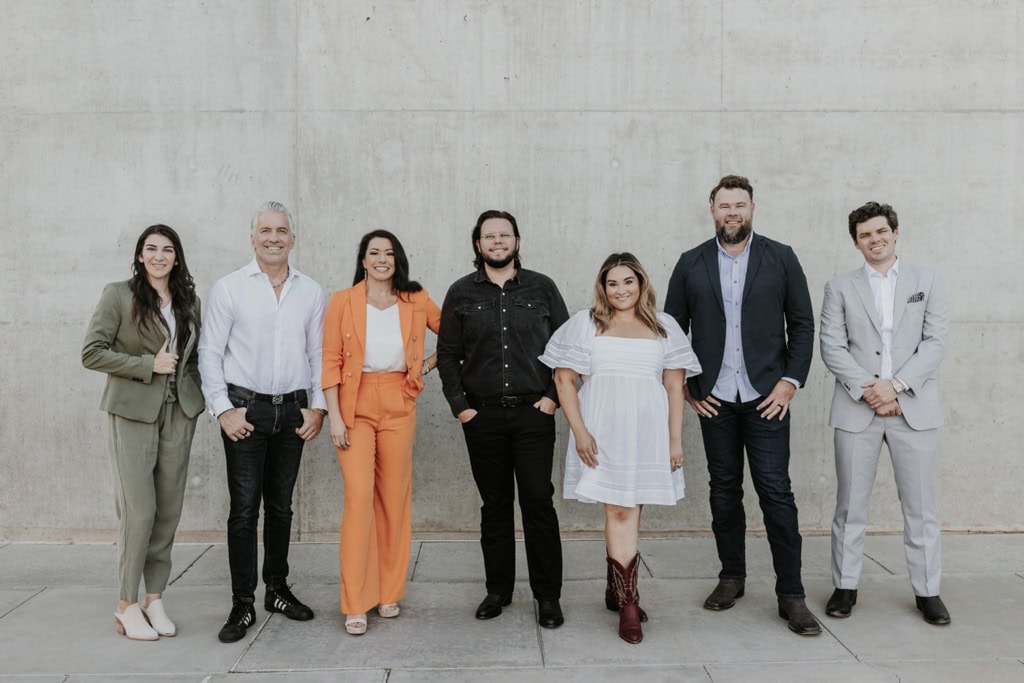
“After a crash, you need a team that answers the phone, explains your options, and fights for every dollar you are owed. That is what we do at The Simon Law Group.”
Over 250 years of combined attorney experience
Phoenix office at 2700 N Central Ave, Suite 320 |
Licensed in Arizona and California
Yes. Arizona law requires restaurant owners to warn guests about known hazards or fix them promptly. A missing warning sign when management knew about the spill strengthens your negligence claim.
A restaurant injury lawyer can use medical lab results, your receipt, and health inspection records to connect your illness to the restaurant. Timing, symptoms, and identified pathogens all help build that connection.
Both can be held liable. In franchise cases, the corporate parent may share responsibility depending on how much control it exercised over daily operations, safety standards, and employee training.
Yes. The restaurant or property owner has a duty to maintain safe parking areas. Cracked pavement, burned-out lights, and missing handrails are common hazards that create liability.
Two years from the date of injury under A.R.S. 12-542. For food poisoning with delayed symptoms, the clock may start when you first discover the illness. Government-property restaurants like those at Sky Harbor have a 180-day notice requirement.
Arizona's pure comparative negligence system under A.R.S. 12-2505 lets you recover damages even if you share some fault. Your award gets reduced by your percentage of responsibility, but it doesn't disappear.
Our Location
Other Locations
Austin, TX
Torrance, CA
Santa Ana, CA
Seal Beach, CA
Areas We Serve
From our main office in Torrance, The Simon Law Group serves injured clients across Los Angeles County and throughout California, Arizona, and Texas. Our Seal Beach office helps us better serve Orange County, and we also have offices in Phoenix, AZ, and Austin, TX.
About Our Firm
The Simon Law Group was founded 15 years ago by twin brothers and attorneys Robert and Brad Simon to protect the rights of accident victims in California. In the fifteen years since our firm was established, our attorneys have recovered $600+ Million in settlements and verdicts for our clients. Recognized by many major legal organizations, we get results, and we’d be proud to fight for you after your accident or injury.
Follow Us!
Attorney Advertising. This website is a communication by The Simon Law Group, LLP. The attorneys responsible for its content are Robert T. Simon (California State Bar No. 238095) and Brad Simon (California State Bar No. 244369). The firm's principal office is located at 2916 W 164th Street, Torrance, California 90504. The information here is general and is not legal advice, and viewing it or contacting the firm does not create an attorney-client relationship. Prior results do not guarantee a similar outcome.