








Primary Location
Torrance Personal Injury Lawyers
2916 W 164th St Second Floor, Torrance, CA 90504
Phone: (424) 622-0812
Call us at (855) 855-8910

Hurt in a truck crash anywhere in the Los Angeles area? The Simon Law Group takes on trucking companies across the metro. We find every party at fault, move fast to preserve the black-box and driver-log evidence, and pursue the full cost of your injuries. Free case review. No fees or costs unless we win.
A member of our intake team will reach out shortly. To speak with someone now, call (424) 622-0812.
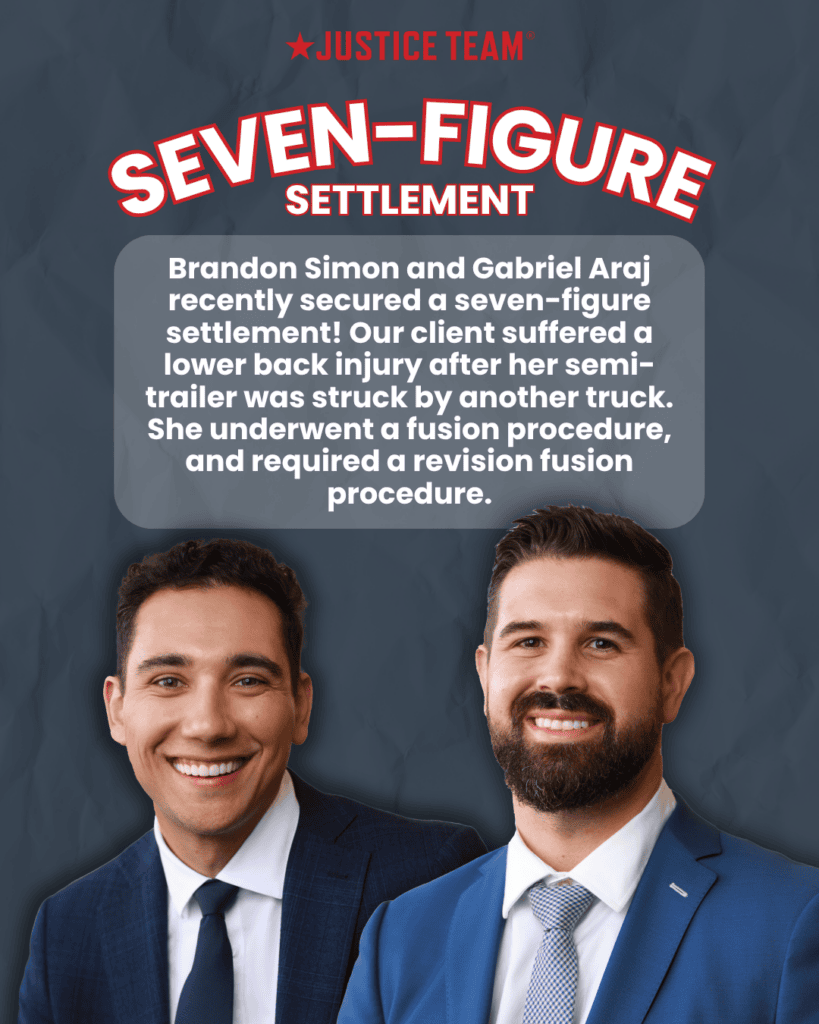
A truck case is not a car case with a bigger vehicle. It runs on federal trucking rules, several companies standing behind the driver, and evidence a carrier can lawfully erase within weeks. In Los Angeles that fight plays out on the busiest freight roads in the country, from the port trucks pouring off the 710 to the big rigs stacked up where the 5 meets the 405. The Simon Law Group is a Los Angeles trial firm, based in Torrance, that has recovered hundreds of millions of dollars for injured Californians, and we take serious truck cases across the entire metro. Our attorneys recently secured a $7 million settlement for a woman who was seriously hurt when a semi-trailer rear-ended her.
Every case is different. Past results do not guarantee a similar outcome.
Blame usually lands on the driver, or on the company standing behind the driver, and not on the person in the smaller vehicle. A loaded big rig can weigh 80,000 pounds, so a mistake that would dent a bumper between two cars can kill someone when a truck is the one that drifts. The usual causes stack up fast: a tired driver, a distracted or drunk one, a wide right turn, freight loaded wrong and shifting in transit, brakes and tires nobody kept up, and a schedule that only works if the driver skips rest.
Los Angeles concentrates all of it in a few places. The Ports of Los Angeles and Long Beach form the busiest container gateway in the country, and the drayage trucks that serve them flood the I-710 day and night. Freight then spreads across the I-5, the I-405, the SR-60, the SR-91, and the I-110, often bumper to bumper, where a single blind-spot lane change turns deadly. At the metro’s northern edge, the Grapevine sends loaded rigs down a long grade on the I-5 where brakes overheat and fail. And on surface streets from the South Bay to the San Fernando Valley, trucks making wide turns catch cars, cyclists, and pedestrians they never saw. Knowing exactly where and how a crash happened helps prove what went wrong, and who should pay for it.
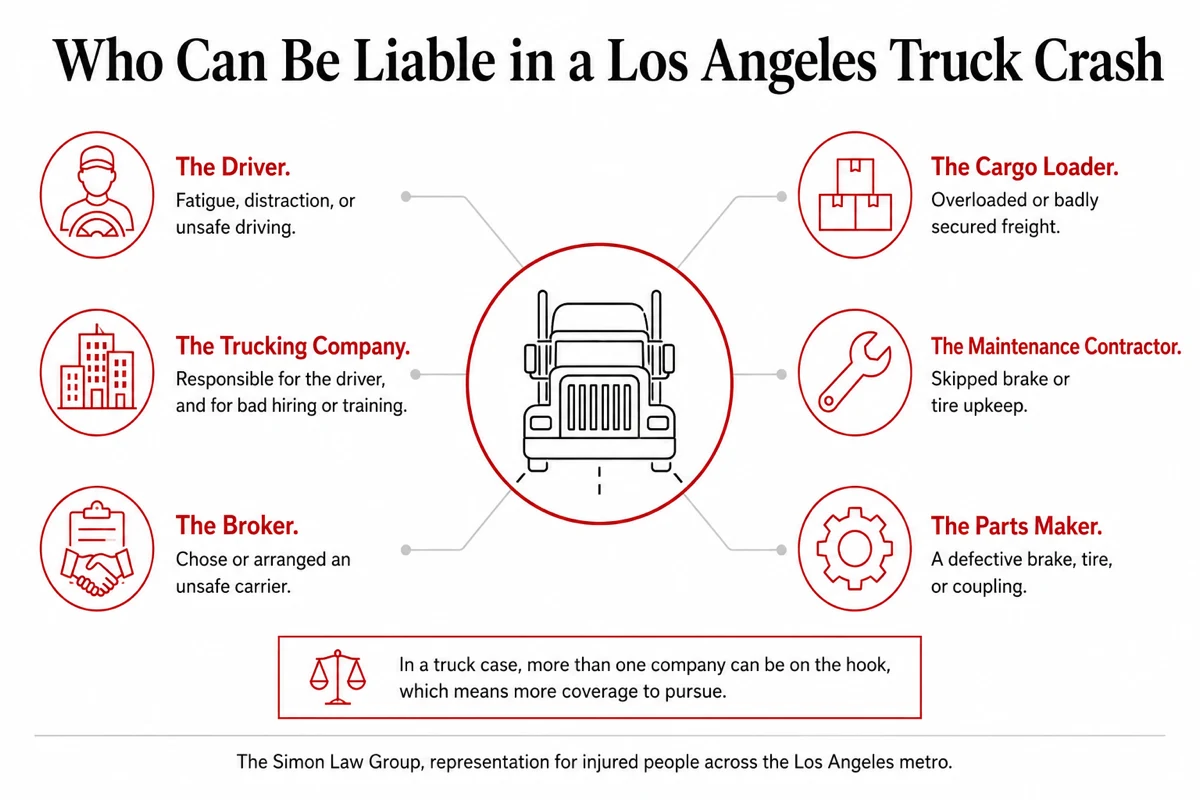
When a truck hurts someone in Los Angeles, the responsibility rarely stops with the person behind the wheel. The company that put that driver on the road can answer for the crash, and so can the businesses that booked, loaded, serviced, or built the rig. Each additional party that shares the blame is another insurance policy that can help pay for what happened to you.
These are the parties we look at in a truck case:
A carrier’s insurer starts shaping the narrative within hours of the crash. Pinning down every responsible party early is often what separates a thin policy that covers one surgery from a recovery that covers the entire harm.
Federal law sets the floor for how a trucking company has to operate, and a rule the company broke often becomes the strongest evidence in the case. Under 49 CFR Part 395, a driver generally cannot exceed 11 hours of driving inside a 14-hour shift, and only after 10 hours off the clock [1]. Nearly every interstate trucker has to record those hours on an Electronic Logging Device, so the data either clears the driver or catches the violation.
Companies carry other duties too. They have to keep a qualification file on each driver, put only properly licensed commercial drivers behind the wheel, and stay current on inspections and repairs. California adds its own layer: intrastate carriers need a state Motor Carrier Permit, and the California Highway Patrol runs commercial-vehicle enforcement alongside the federal program.
None of this is paperwork for its own sake. When the hours logs, inspection reports, or the truck’s onboard data show an exhausted driver or a company that looked past a safety rule, that record can carry an injured person’s case.
No one can quote you an honest “average,” because every truck crash is different. What a case is worth turns on how serious the injuries are, who was at fault, and how much insurance stands behind the crash. Truck cases tend to come with more coverage than an ordinary car wreck, which is one reason they can be worth more.
A complete claim usually reaches several kinds of loss:
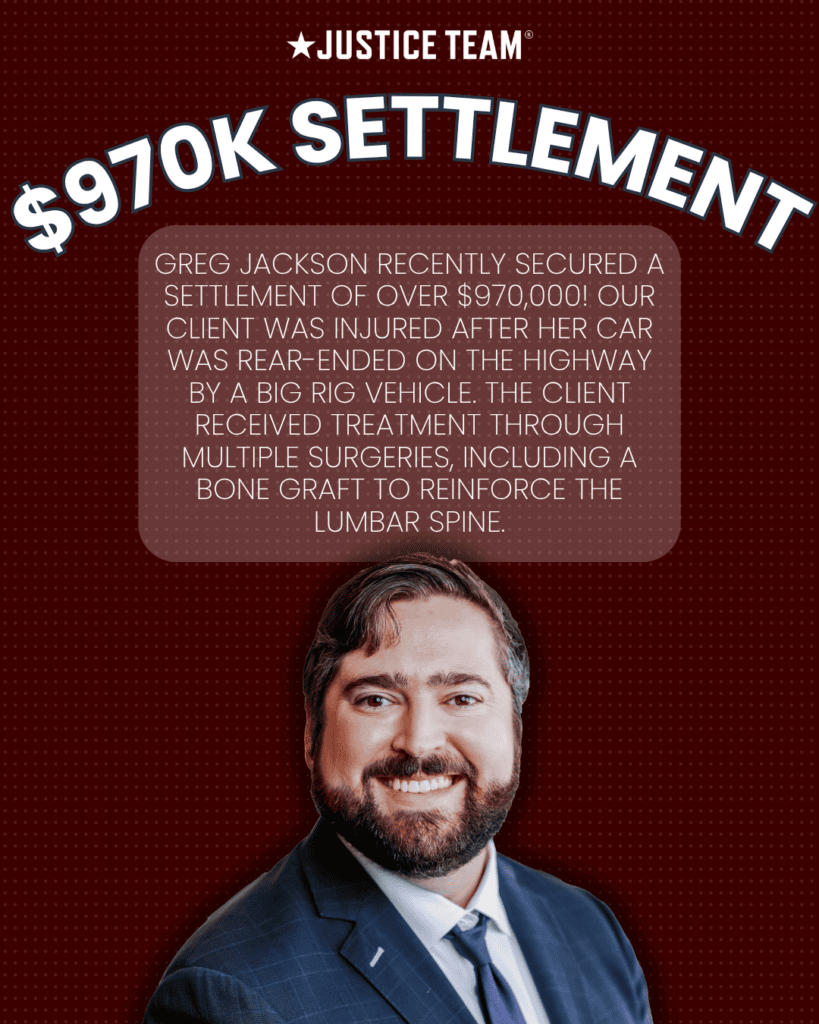
The coverage gap is where truck cases turn. California only makes a driver carry $30,000 in bodily injury coverage per person and $60,000 per crash [4]. A freight truck crossing state lines has to carry at least $750,000, and one hauling hazardous materials up to $5 million, under 49 CFR 387.9 [2]. Congress set that number in 1980 and never adjusted it for inflation, so even the federal minimum can run out in a catastrophic wreck. When it does, we go after excess and additional policies, and your own uninsured and underinsured motorist coverage, which matters in Los Angeles, where plenty of drivers carry the bare minimum or nothing at all. In one case our attorneys recovered $970,000 for a client who needed several surgeries, including a lumbar bone graft, after a big rig rear-ended her car.
What you do in the first hours can shape the whole case. Here is what we tell people to do at the scene and just after.
The evidence is what most people never think about. A truck’s engine control module, or “black box,” its electronic hours logs, any dashcam video, the driver’s qualification file, and the maintenance records can all be wiped or thrown out on the company’s routine schedule. A lawyer can send a preservation letter that legally obligates the company to hold that evidence, but it has to go out quickly.
Where the case is filed matters as well. Most Los Angeles truck crash claims go through the Los Angeles County Superior Court, often at the Stanley Mosk Courthouse downtown, or at the Torrance, Long Beach, Van Nuys, or Compton courthouses, depending on where the wreck happened. Badly hurt victims are usually taken to a Level I trauma center such as LAC+USC Medical Center, Harbor-UCLA in the South Bay, Ronald Reagan UCLA, or Cedars-Sinai, and those records end up at the center of the claim.
The calendar is the last risk. California generally gives you two years from the crash to file an injury lawsuit, under CCP 335.1 [3]. When a Metro bus, a City of Los Angeles or county vehicle, or a Caltrans road defect is part of the story, the window can shrink to six months for a claim notice, under Government Code 911.2 [3]. Those deadlines come faster than people expect, so reach out early. You can start with a free case review.
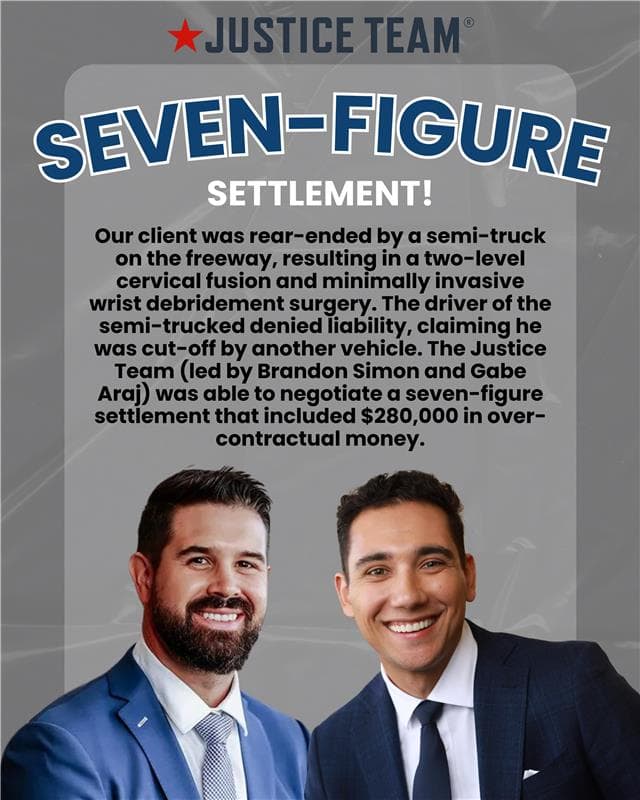

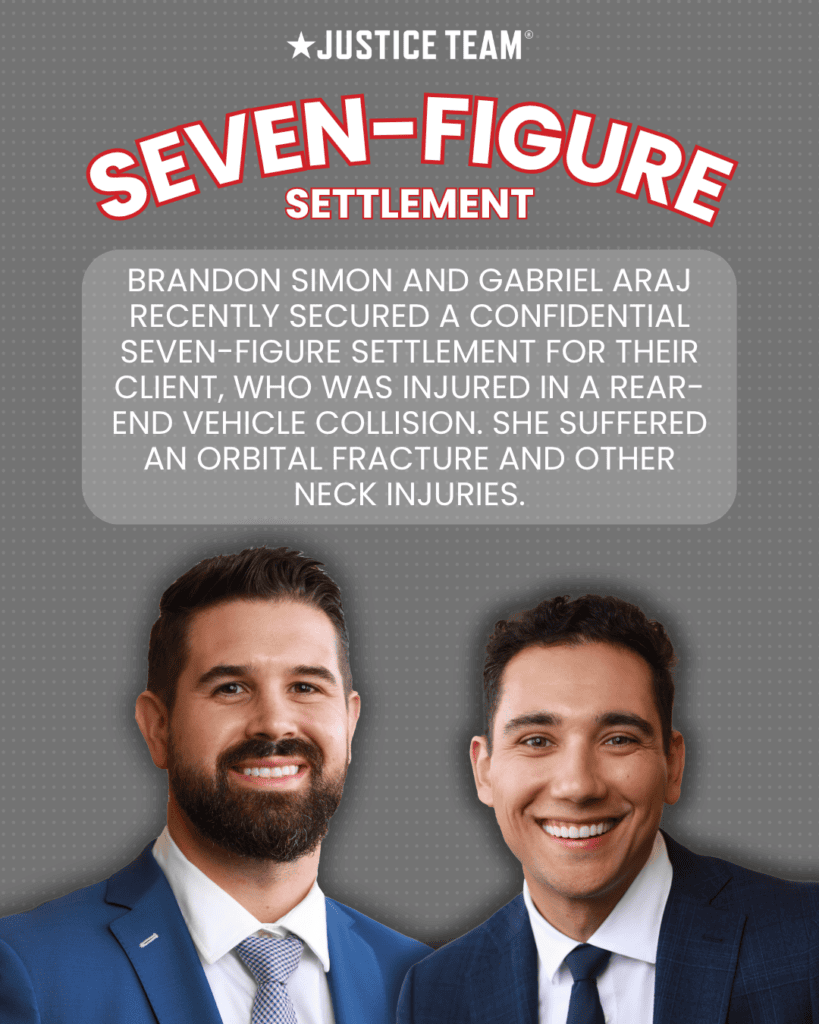
Prior results do not guarantee a similar outcome.
We treat clients like family, we answer the phone day or night, and you work with real attorneys, not just staff. Our firm was built after a drunk driver hurt a member of our own family, and a good lawyer helped that person rebuild. That is still why we do this.
The firm was founded by brothers Robert and Brad Simon. Robert, our founding trial partner, is admitted in California and Arizona. He is a multiple-time Trial Lawyer of the Year voted by his peers, a member of the American Board of Trial Advocates, and Pepperdine School of Law’s Alumnus of the Year. Brad Simon, our co-founder, has been named to Super Lawyers every year from 2014 to 2023 and is admitted before the United States Supreme Court. When a case has to be tried, that trial reputation moves the settlement number.
Results our attorneys have achieved in truck and commercial-vehicle cases include:
Our main office sits in Torrance, in the South Bay, minutes from the 405 and the 110 and the port truck routes where so many of these crashes happen. We represent people hurt across the whole metro, in every LA County courthouse. Wherever the crash happened, you can reach a local team through our Torrance truck accident lawyer page. If your case reaches beyond the metro, our California truck accident lawyer team covers the whole state.
Every case is different. Past results do not guarantee a similar outcome.
Sources:
[1] Summary of Hours of Service Regulations, 49 CFR Part 395 (FMCSA)
[2] 49 CFR 387.9, Financial Responsibility Minimum Levels (eCFR)
[3] California Code of Civil Procedure 335.1 and Government Code 911.2
[4] California minimum auto insurance coverage (SB 1107), California DMV
Nothing up front. The Simon Law Group works on contingency, so you pay no fees or costs unless we win your case. The first consultation is free, and the fee comes out of the recovery, not your pocket.
Freeway truck crashes are exactly what we handle. The location helps us move fast: we can identify the corridor, pull CHP commercial-inspection and traffic data, and send a preservation letter to the carrier before the black-box and log evidence is overwritten. The same steps apply whether the crash was on a port route like the 710 or an interchange like the 5 and 405.
Usually more than one party. Besides the driver, the carrier can answer for how the driver behaved and for its own hiring and training choices. Brokers, cargo loaders, repair shops, and parts makers can share the blame too, and each one can mean more coverage to pursue.
As a rule, two years from the date of the crash, under CCP 335.1. If a government entity is in the mix, such as a Metro bus, a city or county vehicle, or a Caltrans road defect, the deadline can drop to six months for a claim notice, under Government Code 911.2. Reach out early so a deadline does not slip past.
Two reasons. Commercial trucks carry much larger policies, at least $750,000 for general freight and up to $5 million for hazardous loads, and more than one company can be on the hook. Truck wrecks also tend to leave worse injuries. There is still no fixed “average,” because the number depends on the harm and the coverage.
The black box, the electronic hours logs, dashcam video, the driver qualification file, and maintenance records often decide the case. And yes, a company can wipe or discard them on its normal schedule, so a lawyer has to send a preservation letter fast to lock them down.
Call (424) 622-0812 or fill out our form. No fees or costs unless we win.
Our Location