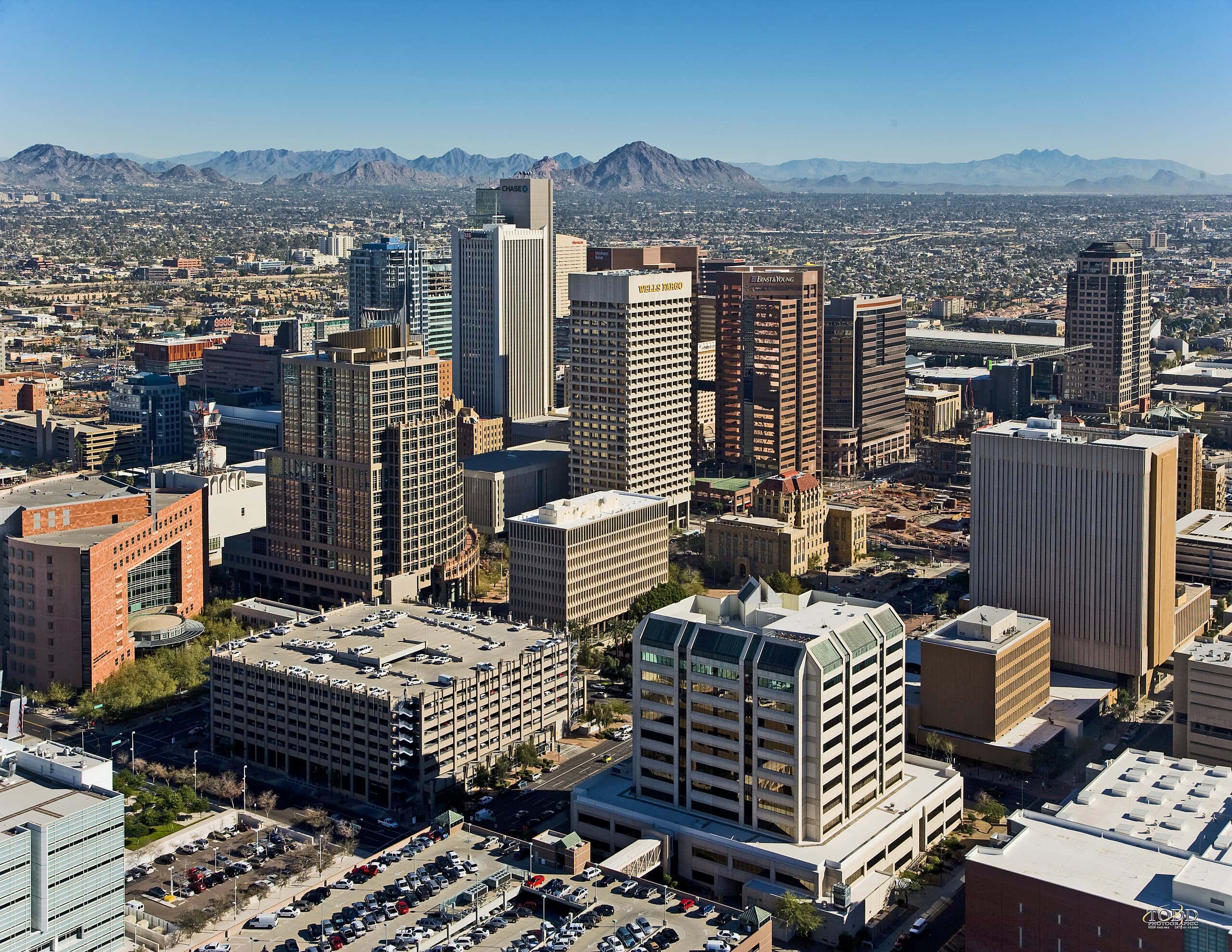
Primary Location
Phoenix Personal Injury Lawyers
2700 N Central Ave Suite 320, Phoenix, AZ 85004, United States
Phone: (602) 905-0124
Call us at (855) 855-8910

Every week, we see the aftermath of truck crashes on I-10 and I-17. The injuries are devastating. A fully loaded semi weighs up to 80,000 pounds -- and when that hits your sedan or SUV, there's no comparison.
We've handled these cases for years. They're nothing like a standard fender bender. You're dealing with trucking companies, federal regulations, corporate lawyers, and insurance adjusters who start calling before you've even left the hospital.
Our personal injury attorneys are available 24/7. We'll sit down with you for a free consultation, walk through your rights, and explain what your case is worth. You won't pay us a dime unless we recover money for you.
Table of Contents
ToggleWhat you do in the first hours after a truck crash can make or break your case. Here's what we tell every client.
Phoenix is one of the biggest freight hubs in the Southwest. Thousands of semis roll through on I-10, I-17, and Loop 202 every single day. The I-10/I-17 Stack and the Ahwatukee corridor? Some of the heaviest truck traffic in Arizona.
When an 80,000-pound truck hits a smaller vehicle, the injuries are almost always serious. In two-vehicle crashes between a large truck and a passenger vehicle, 97% of the fatalities are occupants of the smaller vehicle [1]. That number says it all. Families who lose someone may pursue wrongful death claims after a fatal truck crash.
Here's what we see in these cases:
You deserve compensation that covers the full cost of these injuries. Our team handles catastrophic injury cases in Phoenix and fights for every dollar — not just your first ER bill.
A concussion or TBI from a commercial truck impact often requires months of neurological treatment — our brain injury attorneys can help document and value those long-term costs.
Truck crashes are common here, and Maricopa County carries most of the load. In 2024, the county accounted for 72.74% of all Arizona crashes (AZDOT, 2024 Crash Facts). Phoenix sits at the center of that, so your risk on local roads is real.
The statewide picture is sobering. Arizona saw 121,107 total crashes in 2024, and 1,228 people were killed (AZDOT, 2024 Crash Facts). Trucks and buses were 14,069 of the vehicles involved in those crashes, which is 5.96% of all vehicles involved (AZDOT, 2024 Crash Facts).
The national numbers tell their own story. Across the country, 5,340 people died in crashes involving large trucks in 2024 (NHTSA, Large Trucks 2024 Data).
If you were hit by a truck, you didn't choose the odds. We can help you fight back.
Here's something most people don't realize: a truck accident isn't a two-party situation. Multiple people and companies may share the blame. And each one you identify adds to the compensation pool.
Cross-state carriers run I-40 and I-10 through Maryvale and West Phoenix daily. Many belong to out-of-state companies, which makes claims more complicated -- but also means more insurance policies to go after.
Here's who we look at in every case:
We investigate every link in this chain. The more parties we identify, the more sources of money available to cover your damages.
Arizona uses several liability, not joint-and-several liability (A.R.S. § 12-2506). Each defendant pays only their own share of the fault. No single party covers the rest.
So defense lawyers love to point at an "empty chair." They blame a party who isn't in the lawsuit, hoping to shrink what their client owes. If that absent party is never named, that share of your damages can disappear. Naming every responsible party protects what you can recover.
Big rigs follow federal safety rules that regular drivers never think about. When a trucking company breaks one of those rules, it often becomes the strongest proof of who caused your crash.
Tired drivers cause wrecks. The Federal Motor Carrier Safety Administration limits how long a trucker can stay behind the wheel (FMCSA Hours of Service). A driver can drive up to 11 hours, but only after 10 hours off duty (49 CFR 395.3). All driving has to fit inside a 14-hour window, with a 30-minute break after 8 hours of driving. Break those limits, and fatigue becomes a real risk.
Most commercial trucks now carry an electronic logging device. The ELD records drive time automatically, so a tired driver can't fudge a paper logbook (FMCSA ELD rule). That data is hard evidence. It can show whether the driver was legally allowed to be on the road when they hit you.
A broken federal rule shows the driver, and the company, failed a duty written into law. That makes fault easier to prove. One logbook entry or one missed break can shift the whole case in your favor.
Trucking companies know how to protect themselves. And they move fast. We've seen carriers send rapid response teams to Phoenix crash scenes before police even show up. Their job? Control the evidence.
If you wait, the proof you need can vanish. Here's what we work to lock down immediately:
One of the first things we do is send a spoliation letter. That's a legal notice telling the trucking company: preserve everything. Don't delete it, don't overwrite it, don't lose it. Without that letter, black box data and driver logs can disappear within days.
After a truck crash near Downtown Phoenix or South Mountain, the last thing you want is a daily fight with an insurance company. Bills are piling up. Adjusters are calling. And you're supposed to be healing.
That's what the Phoenix injury attorneys at our firm are here for. We take the whole thing off your plate.
Arizona gives you two years from the crash date to file. That sounds like plenty of time, but it's not. Building a strong truck case takes months of investigation. The sooner you call, the more evidence we can preserve.
Arizona is an at-fault state. Whoever caused your truck accident pays for your damages. But fault isn't always clean -- especially at congested spots like the I-17/I-10 Stack and North Phoenix interchanges where we see disputed-fault crashes regularly.
Here's how Arizona law affects your case:
The insurance company knows these laws inside and out. They'll try to shift as much blame onto you as they can. That's why you need a lawyer who knows the same playbook -- and knows how to beat it.
Federal law requires trucking companies to carry large insurance policies. The potential payout on your claim is significant. And that's exactly why the insurer will fight you tooth and nail.
Whether you were hit in Arcadia, Desert Ridge, or anywhere in Phoenix -- expect a call from the trucking company's insurer. Fast. Here's their playbook:
Don't sign anything without your lawyer. Once you accept a settlement, it's over. You can't go back for more -- even if your injuries end up being far worse than anyone thought.
We handle all contact with the insurance company. We've seen their tactics hundreds of times, and we don't let them work.
Truck accidents cause more harm than a typical car crash. The injuries are worse. The bills are higher. And the time away from work stretches longer. Arizona law lets you go after both economic and non-economic damages from every at-fault party.
Economic damages -- your actual financial losses:
Non-economic damages -- the personal toll:
If the crash caused a wrongful death, surviving family members can pursue funeral costs, loss of financial support, and loss of companionship.
A truck claim can reach a larger recovery than an ordinary car crash, because federal law requires big policies. Most interstate trucks hauling general freight must carry at least $750,000 in liability coverage, and some hazardous loads up to $5,000,000 (49 CFR 387.9). That is far above Arizona's 25/50/15 car minimum, so the money to pay a fair claim is more likely to be there.
Our attorneys have handled major truck cases, including a settlement near $7 million after a semi-trailer rear-ended our client. Results like that come from finding every policy and every at-fault party. Past results do not guarantee a similar outcome.
Every case is different. We calculate the full picture -- not just today's bills -- so the insurer can't shortchange you.
Most truck crashes don't have to happen. They're the result of someone cutting corners -- a driver, a trucking company, a maintenance crew. Here are the causes we see most in Phoenix.
We dig into every cause when we investigate your crash, including car accident claims in Phoenix involving commercial vehicles. More causes usually mean more liable parties -- and more compensation headed your way.
Not every truck crash looks the same. And the type of collision affects how bad your injuries are and how we prove fault. Here's what we see most on Phoenix highways and streets.
Each type of crash leaves different evidence and points to different causes. We know what to look for based on how your wreck happened.
Some Phoenix roads see far more truck traffic and far more crashes than others. Knowing the trouble spots helps you understand how your wreck happened, and who may be at fault.
Freeway interchanges are high-risk by design. The "Stack," where I-10, I-17, and US-60 meet, is one of the busiest. The I-10 "Mini Stack" (also called the "Split"), where I-10 meets SR-51 and Loop 202, is another pressure point. So is the I-10 "Broadway Curve," which carries more than 300,000 vehicles on a typical weekday.
Surface streets aren't spared. The intersection of 99th Avenue and Lower Buckeye Road is the highest-crash intersection in the metro. The I-17 (Black Canyon Freeway) near the "Durango Curve" is a known hotspot too.
There's a reason trucks crowd these roads. I-10 is part of the CANAMEX freight corridor, and Phoenix ranks No. 2 nationally for distribution and warehousing. That concentrates commercial truck volume right where you drive.
Serious injury cases are filed at the Maricopa County Superior Court, 201 W. Jefferson Street, Phoenix. The worst crashes often send people to Level I trauma centers like St. Joseph's (Barrow Neurological), Valleywise Health (Arizona Burn Center), and Banner University Medical Center Phoenix.
Our attorneys have handled personal injury cases across Arizona and California. We know how Phoenix insurance companies operate, and we know how to push back.
That number reflects real results for real families — medical bills paid, lost wages recovered, and futures protected.
You pay nothing upfront. Our fee comes out of your settlement or verdict.
Accidents do not follow business hours. Neither do we. Call (602) 905-0124 any time — nights, weekends, and holidays.
Our Phoenix team works out of 2700 N Central Ave, Suite 320. We know the roads, the courts, and the insurance adjusters you are up against.
You are not just a case number here. When you trust us with your claim, we treat you like family and fight like it matters, because it does.
Robert Simon is a Founding Partner at The Simon Law Group, admitted to practice in both California and Arizona.
“After a crash, you need a team that answers the phone, explains your options, and fights for every dollar you are owed. That is what we do at The Simon Law Group.”
This firm started with a family tragedy. A relative was hurt by a drunk driver. Robert and his brother Brad watched an attorney-won settlement give their loved one the chance to live a good life, and committed to fighting for what is right. Their family has since joined them across California and Arizona.
Robert is a member of the American Board of Trial Advocates (ABOTA). He has been voted Trial Lawyer of the Year several times by his peers, earned honors rather than paid placements, and was named Pepperdine School of Law’s Alumnus of the Year in 2022. He teaches other trial lawyers every month.
Attorney Travis Davis rounds out the Arizona team. He is a member of the Arizona Association for Justice and was nominated as a Rising Star by Super Lawyers in 2023. Like Robert, he is admitted in both Arizona and California.
Our Phoenix office holds a 4.5-star rating across 30 Google reviews. Call (602) 905-0124 for a free case review. There is no fee unless we win.
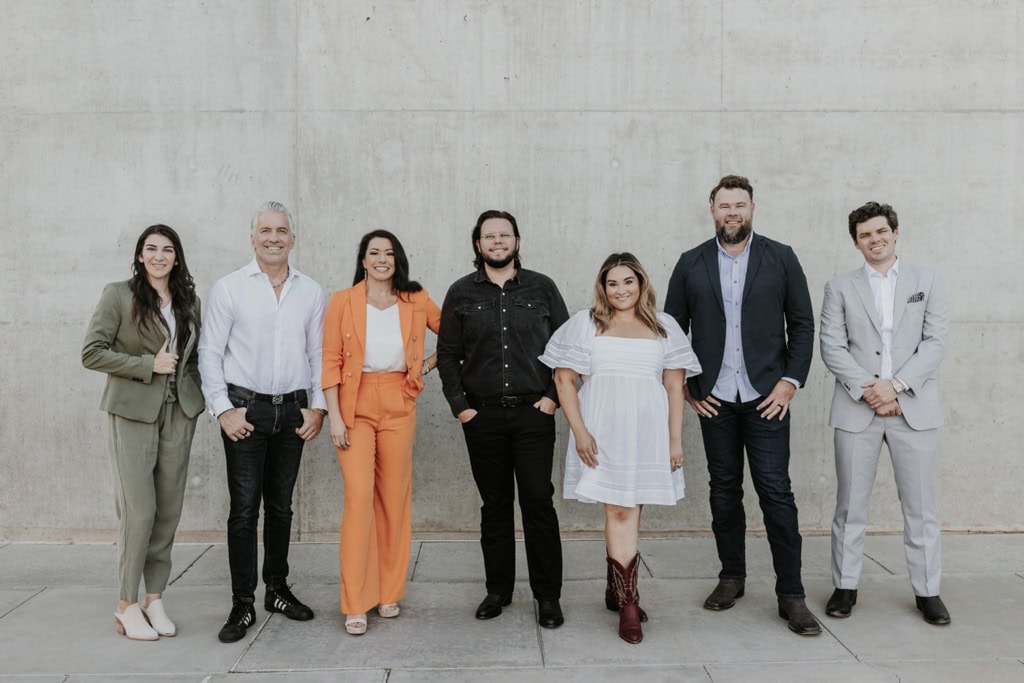
“After a crash, you need a team that answers the phone, explains your options, and fights for every dollar you are owed. That is what we do at The Simon Law Group.”
Over 250 years of combined attorney experience
Phoenix office at 2700 N Central Ave, Suite 320 |
Licensed in Arizona and California
A semi's trailer swings sideways and folds against the cab, sweeping across multiple lanes of traffic. On Phoenix freeways like I-10 and Loop 202, jackknife crashes cause multi-vehicle pileups with catastrophic injuries. Our attorneys preserve black box data, identify every liable party, and fight for the full value of your claim. Learn more about jackknife accident claims.
A truck swings left to set up a right turn, and the trailer pins your car against the curb. These right turn squeeze crashes happen at busy Phoenix intersections along Central Ave, Grand Ave, and near west Phoenix distribution hubs. Our team proves the driver failed to signal or check mirrors, and we hold the trucking company accountable. Learn more about wide turn truck accident claims.
A tire explodes at highway speed and the truck loses control. Phoenix heat accelerates rubber degradation, and trucking companies that skip pre-trip inspections put everyone at risk. Our attorneys investigate the tire manufacturer, the maintenance provider, and the fleet operator to find every liable party. Learn more about tire blowout accident claims.
Two years from the date of the crash under Arizona law. If the accident caused a wrongful death, the family has two years from the date of death. Miss that window and you lose your right to compensation -- no exceptions.
Yes. Arizona follows pure comparative negligence. Your award gets reduced by your share of fault, but you don't lose everything. If you're 10% at fault and your damages total $300,000, you still walk away with $270,000.
Most commercial trucks have an electronic control module -- basically a black box. It records speed, braking, and steering data right before a crash. We demand this evidence immediately, before the trucking company has a chance to erase or overwrite it.
No. Don't do it. Anything you say can be twisted to shrink your claim. Even something as simple as "I'm doing okay" gets used against you. Let us handle all communication with the insurer.
Your health insurance or MedPay coverage can cover treatment while the case is open. Once it settles, your settlement reimburses those costs. Don't put off medical care just because your claim hasn't resolved yet.
Absolutely. First offers are almost always below what your case is actually worth. We review the full cost -- medical care, lost income, future needs -- before you sign anything.
A driver can drive up to 11 hours after 10 hours off, all inside a 14-hour window, with a 30-minute break after 8 driving hours (49 CFR 395.3). If a driver broke that rule, it can show fault. We pull the driver's logs and electronic logging device data to check.
Yes. The trucking company, the cargo loader, a maintenance shop, or a parts maker may share fault. Arizona uses several liability, so each defendant pays only their own share (A.R.S. § 12-2506). That makes naming every responsible party early very important.
Most interstate freight trucks must carry at least $750,000 in liability coverage, and some hazardous loads up to $5,000,000 (49 CFR 387.9). That is far above the 25/50/15 minimum Arizona requires for regular cars, so a truck case often has more money available.
Truck claims are bigger and harder. Trucks carry much larger policies, follow federal safety rules, and often involve several at-fault parties. The evidence is heavier too: logbooks, ELD data, and the black box, and it can disappear fast. For a standard crash, see our Phoenix car accident lawyer page.
First, take care of your family. Arizona lets close family members bring a wrongful death claim within two years of the date of death (A.R.S. § 12-542). Key truck evidence can vanish quickly, so reaching out sooner protects your rights. Learn more on our Phoenix wrongful death lawyer page.
Our Location
Other Locations
Austin, TX
Torrance, CA
Santa Ana, CA
Seal Beach, CA
Areas We Serve
From our main office in Torrance, The Simon Law Group serves injured clients across Los Angeles County and throughout California, Arizona, and Texas. Our Seal Beach office helps us better serve Orange County, and we also have offices in Phoenix, AZ, and Austin, TX.
About Our Firm
The Simon Law Group was founded 15 years ago by twin brothers and attorneys Robert and Brad Simon to protect the rights of accident victims in California. In the fifteen years since our firm was established, our attorneys have recovered $600+ Million in settlements and verdicts for our clients. Recognized by many major legal organizations, we get results, and we’d be proud to fight for you after your accident or injury.
Follow Us!
Attorney Advertising. This website is a communication by The Simon Law Group, LLP. The attorneys responsible for its content are Robert T. Simon (California State Bar No. 238095) and Brad Simon (California State Bar No. 244369). The firm's principal office is located at 2916 W 164th Street, Torrance, California 90504. The information here is general and is not legal advice, and viewing it or contacting the firm does not create an attorney-client relationship. Prior results do not guarantee a similar outcome.